Ultra-Thin Double-Sided Tape for Cell Phone
2022/03/12
Ultra thin double-sided tape with backing is a commonly used adhesive material for cell phones. The backing materials include polyethylene terephthalate (PET) film, rubber, polyurethane (PU) film, non-woven fabric, polyvinyl chloride (PVC) film and polyethylene (PE) foam, etc. With the thinning of cell phones, the thickness of the double-sided tape is reduced to less than 50 μm, and the thickness of 50 μm or less is usually called ultra-thin double-sided tape; the thickness of 10~30 μm is the most popular. The thickness of PE foam has reached or exceeded 100 μm, so it is rarely used in other parts of smartphones except for bonding the display. PET film has high tensile strength and high tensile force when it is as thin as 1~2 μm, so it can be used as a carrier in ultra thin tapes.
Smartphones have fine workmanship and sophisticated and complex internal components, so each part that needs to be bonded has different performance requirements for ultra-thin double-sided tape.
Bonding of different parts in a smartphone
Smartphones mainly use graphite sheets to dissipate heat, that is, graphite sheets are pasted behind the heat source (chip and battery).
The heat is dissipated by thermal conduction to the graphite sheet. Thin double-sided tape backing is a polymer, and its thermal conductivity is much worse than that of metal and graphite sheets. In order to quickly transfer heat to the graphite sheet, the double-sided tape is required to be particularly thin, and the thickness should preferably be controlled in the range of 5~10 μm. During the operation of the smartphone, the temperature will increase accordingly, up to 70~80 ℃. The ultra-thin double-sided tape must maintain a high adhesive force at high temperature, otherwise the edge of the graphite sheet will bounce off due to the decrease in the adhesive force of the double-sided tape.
The bonding of graphite sheets brings great challenges to the design of ultra-thin double-sided tapes. First of all, it is necessary to ensure that the graphite sheet does not warp or pop open at high temperature, and the adhesive force and cohesive strength of the ultra thin double-sided tape can maintain 50% or more of room temperature at high temperature, and the glue cannot flow at high temperature (Otherwise, it will contaminate the edge of the heat source). Usually, the transfer tape is easy to flow and overflow at high temperature, and the ultra thin double-sided tape containing the carrier will not overflow because the adhesive layer is fixed by the carrier; however, when the thickness of the ultra thin double-sided tape is reduced to 5~10 μm, the thickness of the backing needs to be controlled within the range of 1~2 μm, which greatly challenges the existing coating technology (such a thin carrier is affected by the coating process during the coating process. It is particularly prone to breakage due to tensile tension).
In addition, before coating the ultra thin double-sided tape of the PET carrier, both sides of the PET carrier will be corona treated to increase the bonding force between the adhesive layer and the PET film. But when the thickness of the carrier is 1~2 μm, the corona may break down the PET film (because the adhesion between the carrier and the adhesive layer of the 5~10 μm ultra-thin double-sided tape is worse than that of the thick double-sided tape). Horaetape solves the problems of low bonding strength and poor heat resistance of ultra-thin double-sided tapes. The 180° peel force of 8205 (5 μm) and 8210 (10 μm) double-sided tapes can exceed 600g/25mm and 1000g/25mm, and the sticking force at 70 °C exceeds 168 hours. The material of choice for graphite sheet bonding applications.
Smartphone touch technology cannot completely eliminate buttons (such as volume adjustment buttons and on-off buttons, etc.). These buttons are relatively small, and the force they are subjected to is particularly large, so there are buffer pads under the keys; the buttons and the buffer pad are connected by double-sided tape. The buttons are typically metal or plastic, and the bumper is a low surface energy silicone rubber, which cannot be bonded with acrylic PSA. Therefore, the two sides of the glue should be designed as acrylic PSA and silicone PSA respectively, acrylic PSA is used for bonding metal or plastic, and silicone PSA is used for bonding silicone rubber. At present, the thickness of differential adhesive tape is mainly 60 μm.
Category
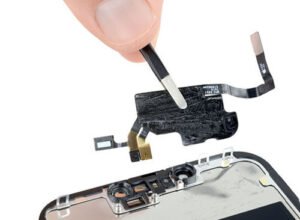
Flexible circuit boards (FPCs for short) can save more space, meet high-density installation and design and reduce product weight. In a smartphone, buttons, microphones, earpieces, cameras and batteries are all connected to the motherboard by FPC. FPC can be bent, rolled and folded freely, but once assembled into a smartphone, it cannot be moved easily, so it needs to be bonded and fixed with double-sided tape.
The outermost layer of the FPC is a polyimide (PI) film, which has a high rebound stress after bending, and the FPC in the smartphone is very small, so the bonding area of the double-sided tape is also very small. Therefore, while the thickness of the double-sided tape is reduced to extremely thin, it must also have ultra-high adhesive strength and cohesive strength, otherwise the FPC will bounce off after being fixed by the double-sided tape. For most double-sided tapes, once the thickness is reduced, the adhesive strength of the adhesive will decrease.
Related Products: 8630